
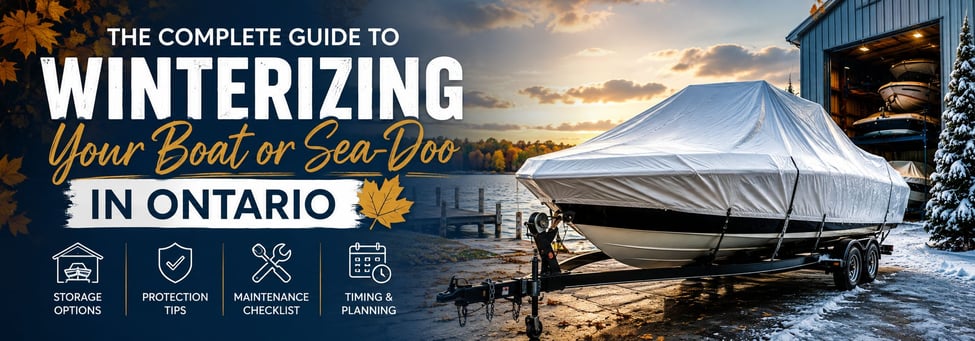
Marina Storage, Garage Storage, Shrink-Wrapping, Maintenance & Everything You Need to Know Before Winter
I hate to say it...
Summer on Lake Simcoe doesn't last forever. 😭
The days are already getting shorter, fall is around the corner, and eventually those beautiful evenings on the water are going to turn into "Why do I live somewhere where my eyelashes freeze?"
Welcome to Ontario. 😂
If you own a boat, Sea-Doo or personal watercraft (PWC), fall also means something else: It's time to start thinking about winterization.
And if this is your first season owning a boat, you may be wondering exactly what I wondered:
Where do I put this thing all winter? Do I leave it at a marina? Bring it home?
Park it in my garage? Shrink-wrap it?
Should it be heated? What about humidity?
Do I take the battery out? What happens to the fuel?
And what exactly does "winterizing an engine" even mean?
I quickly discovered that putting a boat away for an Ontario winter involves a little more than parking it and saying, "See you in May." 🚤
So, whether you boat on Lake Simcoe, Kempenfelt Bay, Barrie, Innisfil, Oro-Medonte, Shanty Bay or elsewhere in Ontario, here's what you should know before the temperature drops.
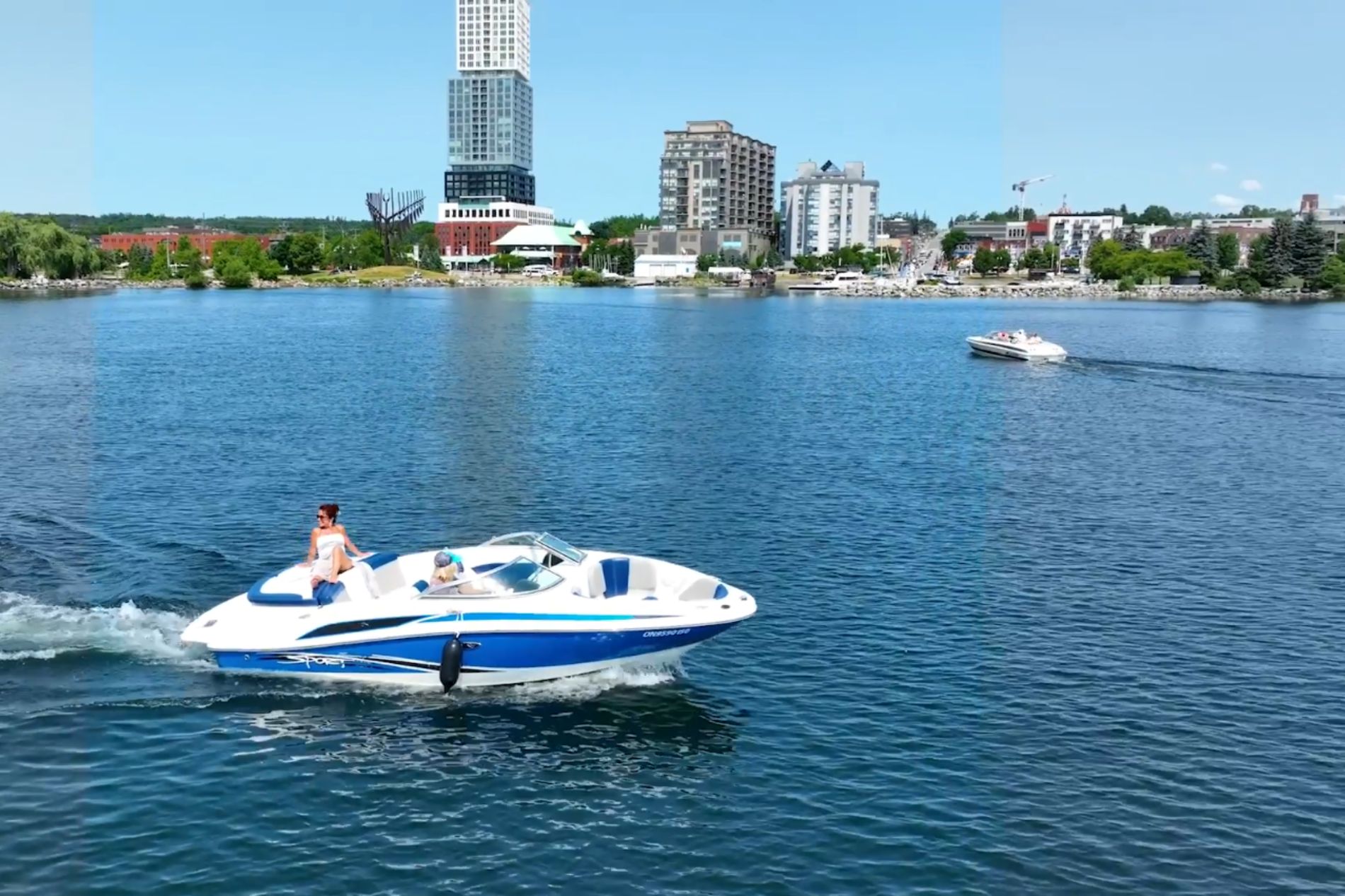
🚤 First: What Does Winterizing a Boat Actually Mean?
Winterizing isn't simply covering your boat.
It's preparing the engine, fuel system, plumbing, batteries, hull and interior to sit unused through months of freezing Ontario temperatures.
Water is one of the biggest concerns.
If water remains inside an engine, hose, pump or plumbing system and freezes, it expands—and that can mean a very unpleasant surprise when boating season returns.
Transport Canada also emphasizes regular maintenance of a recreational boat's engine, fuel, electrical, propulsion and cooling systems. Proper maintenance isn't just about protecting your investment; it's part of keeping the vessel safe to operate.
Your exact winterization procedure will depend on the boat, engine and manufacturer's recommendations, so your owner's manuals should always take priority over a generic online checklist.
🔧 What Usually Happens During Boat Winterization?
Depending on your boat and engine, professional winterization may involve stabilizing the fuel, changing engine and gear-case fluids, draining water, protecting the cooling system, inspecting belts and hoses, servicing the battery and protecting internal engine components.
It's also an excellent time for maintenance.
Instead of discovering a problem on the first gorgeous Saturday in May—when apparently every other boat owner in Ontario also needs a mechanic—you can have the boat inspected in the fall.
Transport Canada recommends regularly checking the hull, electrical and fuel systems, cooling and propulsion systems, hoses, belts, spark plugs, filters, battery and other components.
Fall maintenance can make spring boating MUCH easier.
🌊 Don't Forget About Your Sea-Doo or PWC
Sea-Doos and other personal watercraft need winter attention too.
They're smaller, but that doesn't mean you can simply pull one into the garage and forget about it.
The engine, fuel system, battery and other components still need to be prepared for storage according to the manufacturer's instructions.
And because different Sea-Doo models and propulsion systems can require different procedures, this is one area where I would absolutely follow the specific owner's manual or have a qualified marine technician do the work.
Your Sea-Doo may be tiny compared with your boat...
The repair bill doesn't necessarily have to be. 😂
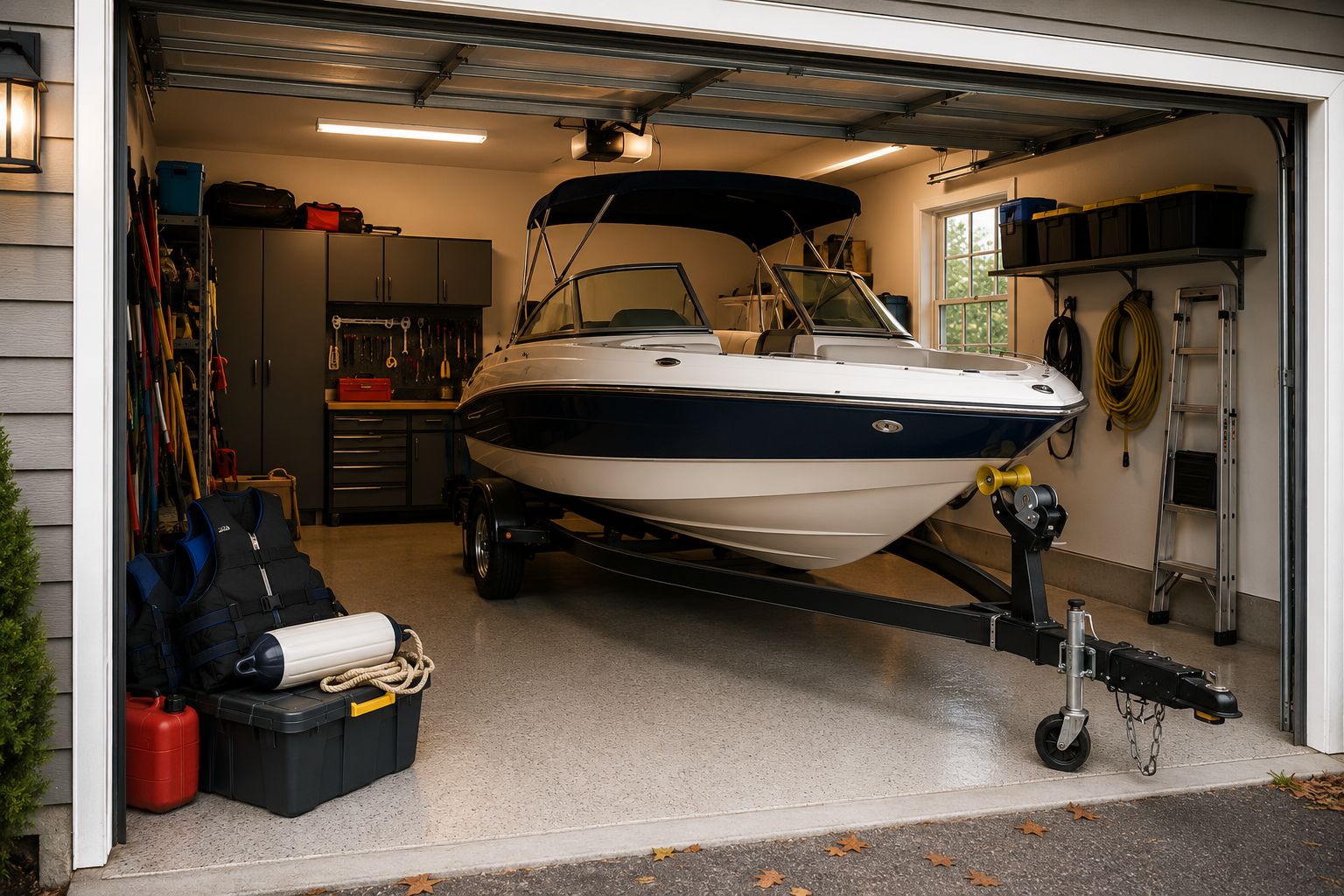
🏠 Can You Store Your Boat in Your Garage?
Absolutely—if it fits.
And before you assume it does, measure the entire setup.
Not just the boat.
Boat + trailer + motor + tongue + height.
That beautiful boat suddenly becomes VERY long when you're trying to close a garage door behind it. 😂
Indoor garage storage has some major advantages.
Your boat is protected from snow, ice, UV exposure, wind and precipitation. You also have easy access if you want to check the battery, inspect the cover or work on the boat during winter.
But there's an important distinction:
Heated doesn't automatically mean better.
Moisture and poor ventilation can create condensation, mildew and mould. A boat stored in a warm but damp environment isn't necessarily better protected than one stored properly outdoors.
The goal is dry, protected and ventilated.
Before storage, make sure the boat is thoroughly dry. Remove wet gear and anything that can trap moisture. Consider removing cushions and storing them somewhere dry, and leave appropriate compartments open to encourage airflow.
Discover Boating Canada recommends cleaning the interior, opening drawers and lockers, allowing air to circulate around cushions, and considering moisture absorbers or dehumidification to help prevent mildew.
🏢 What About Indoor Marina Storage?
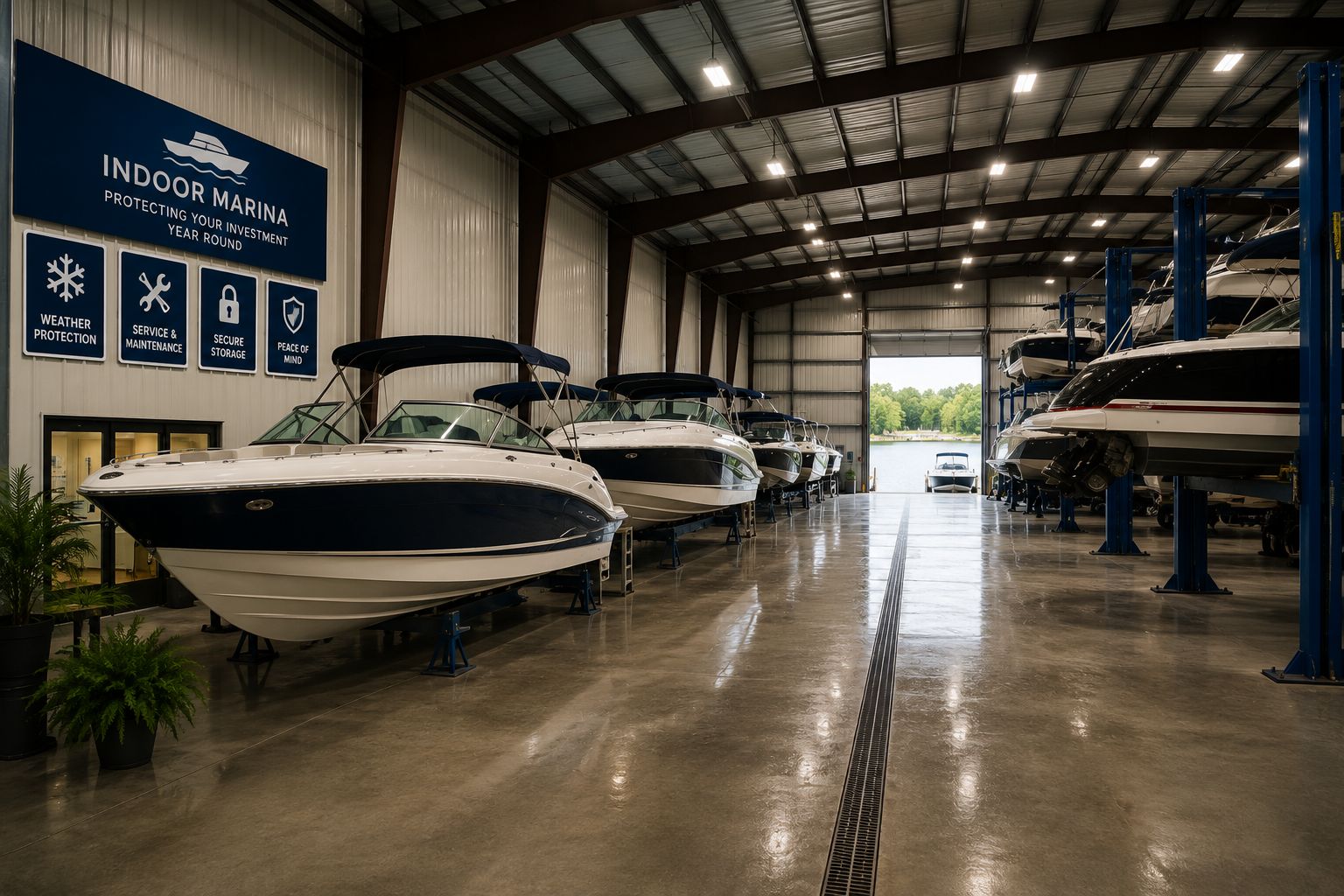
If you don't want a boat occupying half your garage—or your garage simply isn't big enough—indoor marina storage can be one of the easiest options.
Depending on the facility, a marina or marine storage company may handle almost everything:
They may haul the boat out, winterize the engine, perform maintenance, store the boat indoors and launch it again in spring.
When I first started looking into this, I genuinely didn't realize how much some marine facilities could do for you.
I thought I was going to have to become part Realtor, part mechanic and part professional boat hauler.
Apparently not. 😂
Around Barrie and Lake Simcoe, it's worth asking your marina or marine service facility whether they provide winter storage, haul-out/launch services and access to marine technicians.
The big advantages are convenience, professional handling and protection from Ontario weather.
The disadvantage?
Naturally... convenience has a price.
But for someone who doesn't have the space, equipment or desire to handle winter storage themselves, it can be worth every penny.
🌨️ Outdoor Storage: Is It Okay?
Yes.
Thousands of Ontario boats spend every winter outside.
But they need to be prepared and covered properly.
Outdoor storage is generally less expensive than heated or indoor storage, and you don't sacrifice valuable garage space.
The trade-off is exposure to Ontario's snow, freezing rain, wind, temperature swings and moisture.
That brings us to the big question...
🎁 Should You Shrink-Wrap Your Boat?
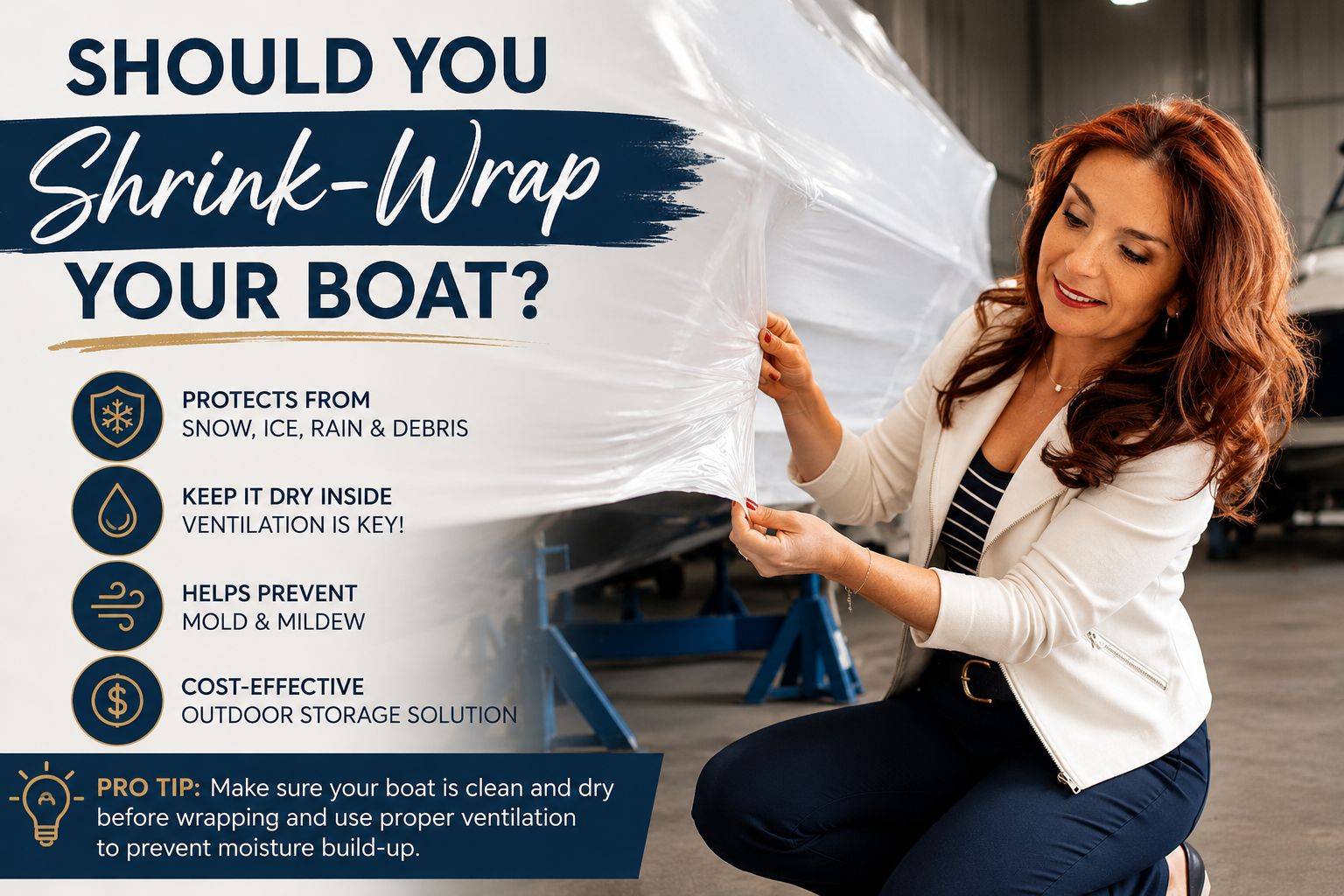
Shrink-wrapping is extremely popular for outdoor boat storage.
A professionally installed marine shrink-wrap creates a tight protective barrier against snow, rain, ice, dirt and debris.
But here's the important part:
A boat shouldn't simply be sealed inside plastic like leftover lasagna. 😂
Ventilation matters.
Without appropriate ventilation, moisture trapped inside can contribute to condensation, mildew and mould.
That's one reason professional shrink-wrapping normally incorporates ventilation.
Before wrapping, the boat should also be clean and dry, and wet items should be removed.
Discover Boating Canada describes climate-controlled indoor storage as ideal when practical, with shrink-wrapping as another highly protective option. It also specifically recommends taking steps to keep the interior dry and mildew-free.
So when someone tells you:
"Don't shrink-wrap because it creates humidity!"
The better answer is:
Improper moisture management creates problems. Properly prepared and ventilated shrink-wrap can provide excellent winter protection.
🆚 Garage, Indoor Storage or Shrink-Wrap?
There isn't one perfect answer.
If you have a large, dry garage and want access to your boat all winter, garage storage can be fantastic.
If you want maximum convenience and don't want to deal with hauling, winterizing or storing the boat yourself, professional marina or indoor marine storage may be worth the extra cost.
If you want a more economical solution and have a safe place to leave the boat outside, properly winterized and ventilated shrink-wrap can be an excellent option.
The right choice depends on your boat, available space, budget and how hands-on you want to be.
🔋 What About the Boat Battery?
Don't simply forget about it until May.
Cold weather, months of inactivity and gradual discharge can leave you with a dead—or damaged—battery by spring.
Depending on your battery type and manufacturer's instructions, it may be removed and stored appropriately or maintained using a suitable battery maintainer.
Discover Boating Canada recommends removing batteries for winter storage and maintaining their charge periodically.
And yes...
Finding out your battery is dead after you've backed down the boat launch with six people waiting behind you is probably not the ideal way to start boating season. 😂
🧽 Fall Is Also the Perfect Time to Clean Everything
Before putting the boat away, give it a proper cleaning.
Remove food.
Remove garbage.
Remove wet towels.
Remove life jackets and gear that can hold moisture.
Clean the hull.
Inspect the propeller.
Check the trailer.
Look for cracks, damage or leaks.
Discover Boating Canada recommends pressure-washing the hull for out-of-water storage and inspecting underwater components. Transport Canada likewise recommends regular hull and equipment inspections.
A little work now can prevent a lot of frustration in spring.
⚓ Don't Forget the Trailer
Your boat may get all the attention, but your trailer just spent an entire summer being backed into water.
Inspect the tires, bearings, lights, wiring, winch, straps and frame.
If you regularly launch into the lake, also remember to clean, drain and dry your boat, trailer and equipment to help prevent the spread of aquatic invasive species. Transport Canada's 2026 Safe Boating Guide specifically advises draining standing water from areas including bilges, livewells and other equipment before leaving a launch area.
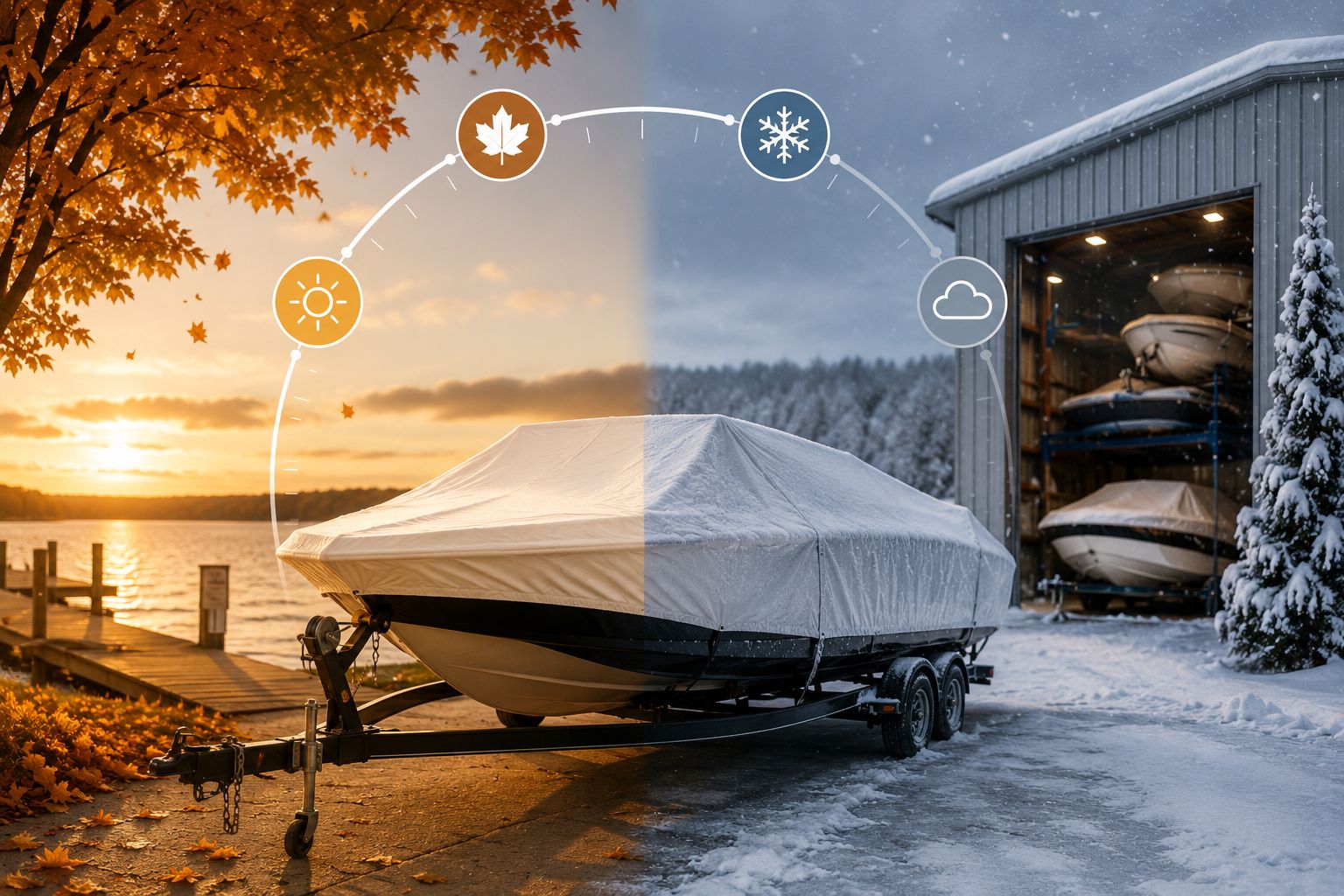
⏰ When Should You Winterize Your Boat in Ontario?
Don't wait for the first deep freeze.
Fall weather around Barrie and Lake Simcoe can change quickly, and marina winterization schedules can fill up.
Start calling your marina or marine mechanic before you actually need them.
Ask about haul-out dates, winterization packages, storage availability, shrink-wrapping, spring launch and whether mechanical servicing can be completed while the boat is stored.
Planning early gives you choices.
Calling after the first freezing night gives you...
whatever appointment is left. 😂
❓Frequently Asked Questions About Winterizing a Boat in Ontario
Do I really need to winterize my boat in Ontario?
If your boat will be exposed to freezing temperatures, its systems need to be prepared appropriately. Exactly what is required depends on your engine and equipment. Always follow the manufacturer's winterization instructions.
Should I store my boat inside or outside?
Both can work. Indoor storage provides greater protection from the elements, while outdoor storage is usually less expensive. A properly winterized and protected boat can be stored outside successfully.
Is a heated garage best for storing a boat?
Not necessarily. A dry, well-ventilated environment is important. Heated storage can be excellent, but warmth doesn't solve a moisture or ventilation problem.
Does shrink-wrap cause mould?
Shrink-wrap itself isn't automatically the problem. Trapped moisture and inadequate ventilation can contribute to mould and mildew. The boat should be clean and dry before wrapping, and the covering should be properly ventilated.
Should I remove my boat battery for winter?
Depending on the battery and manufacturer's instructions, removal or proper maintenance during storage may be recommended. Don't simply leave a discharged battery unattended all winter.
Does a Sea-Doo need to be winterized in Ontario?
Yes, if it's being stored through freezing Ontario conditions, it needs appropriate end-of-season preparation. Follow the manufacturer's procedure for your specific PWC.
Can a marina winterize and store my boat for me?
Many marine facilities offer combinations of haul-out, winterization, mechanical service, shrink-wrapping, storage and spring launch. Services vary, so ask exactly what's included when comparing prices.
Can I winterize a boat myself?
Some experienced boat owners do. But improper winterization can result in expensive damage. If you're new to boating or aren't confident working with your particular engine, hiring a qualified marine technician is a very reasonable investment.
🌅 One Last Lake Simcoe Cruise?
Here's the difficult part. You don't want to put the boat away too early...
because September can deliver some absolutely beautiful days on Lake Simcoe and Kempenfelt Bay.
But you don't want to be that person desperately calling every marina after the temperature suddenly drops either. 😂
My plan? Enjoy every last beautiful boating day I can. Watch the fall colours from the water.
Take in a few more Lake Simcoe sunsets.
And then admit defeat... Winter is coming. ❄️
If you live in Barrie, Innisfil, Oro-Medonte, Shanty Bay or anywhere around Lake Simcoe, owning a boat or Sea-Doo is one of the best ways to experience what makes this area so special.
Yes, there's maintenance. Yes, there's winterization.
And yes, for several months of the year your beautiful boat becomes a very expensive object sitting under a cover.
But when that first perfect boating day arrives next spring?
Worth it. Every. Single. Time. 🚤❤️
Keep Reading
New to boating? Read my Ultimate Beginner's Guide to Buying and Owning a Boat in Ontario for everything I wish I'd known before buying my first boat. CLICK HERE
And if you're wondering why a waterfront REALTOR® decided she needed her own boat in the first place, read What Buying a Boat Taught Me About Lake Simcoe Waterfront Living. CLICK HERE
Because around here, the house is only part of the story.
The lake is the lifestyle. 🌊