- Submenu for Avoid Money Pit
- HOW TO BUY A HOUSE?
- FHSA
- Credit Score Affects You
- Calculators
- Save on Interest
- Avoid Money Pit
- 5 Costly Mistakes
- Buyer's Guide
Buying a home is exciting — until the “dream house” turns into a money pit. Many serious problems aren’t obvious at first glance. Even the most experienced buyers can miss hidden issues that lead to expensive repairs.
Here’s your 2026 guide to spotting the big ones before you sign on the dotted line.
A leaky roof can drain your wallet fast. Here’s what to look for:
Water stains or discoloration in the attic
Sagging or uneven shingles
Moss, mold, or soft spots
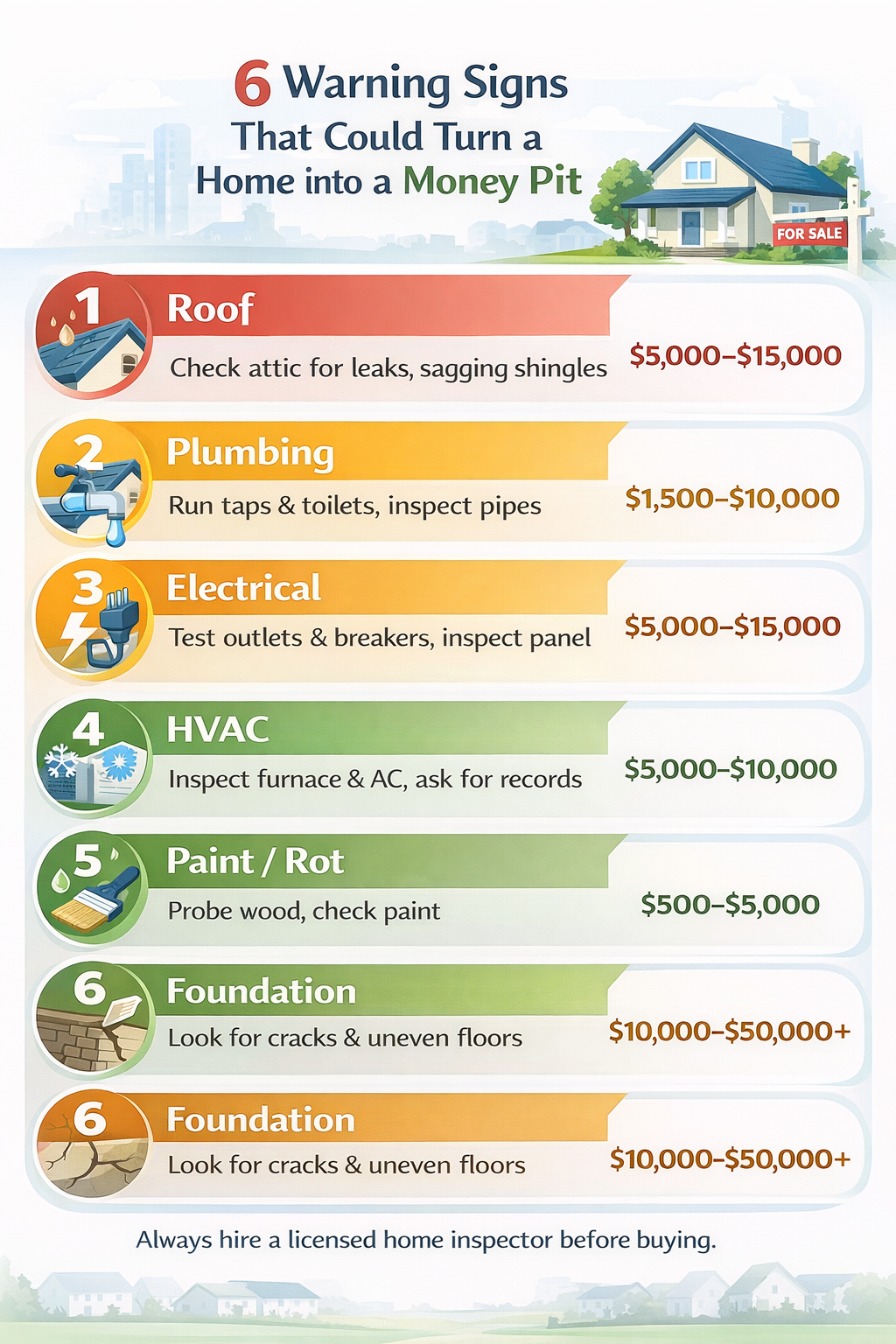
💡 Gemma Tip: Bring a flashlight and check the attic ceiling — this is often where problems first appear. If you see water marks, budget for repair or replacement. Roof repairs can range from $5,000–$15,000 depending on size and materials.
Water is life — but a bad plumbing system is a nightmare. Inspect:
Fresh water supply: check pressure, look for leaks under sinks
Drainage/sewage: test every drain, run multiple taps at once
Visible corrosion or outdated pipes (galvanized pipes may need replacing)
💡 Quick test: Flush all toilets, run faucets, and check the basement for signs of leaks. Plumbing repairs can cost anywhere from $1,500–$10,000 depending on the problem.
A safe electrical system is non-negotiable. Before buying:
Test major appliances and power tools simultaneously
Look for old wiring, exposed wires, or frequent breaker trips
Check the main panel for outdated fuses instead of circuit breakers
💡 Fun fact: Faulty wiring is a leading cause of house fires. Rewiring a whole house can cost $10,000+, so this is worth inspecting carefully.
HVAC issues are expensive and easy to overlook:
Check the age of the furnace and AC units
Listen for unusual noises and look for leaks
Ask for maintenance records if available
💡 Gemma Tip: A 15–20-year-old furnace or AC may need replacement soon — budget $5,000–$10,000.
Paint isn’t just cosmetic — it can hide rot, mold, or water damage. Look for:
Bubbling or peeling paint
Soft wood under windows, doors, and siding
Mildew or moldy smells
💡 Pro trick: Use a screwdriver to gently probe wood around baseboards and window sills. If it’s soft, the underlying structure may be compromised.
Foundation problems are serious but often negotiable. Signs to watch for:
Cracks in walls or ceilings (especially vertical or stair-step cracks)
Doors or windows that don’t close properly
Uneven or sloping floors
💡 Reality check: Not all cracks are disastrous, but major foundation issues can cost $10,000–$50,000+ to repair. This can be a bargaining point or a condition for the seller to fix before closing.
Always hire a licensed home inspector — they see what you can’t
Check basements and crawl spaces for moisture
Look at roof drainage, gutters, and downspouts
Ask the seller about past repairs and warranty info
💡 Pro move: Combine your inspection findings with a home inspection checklist to stay organized and avoid surprises.
Inspecting a home is more than walking through with rose-colored glasses. Spotting hidden problems before you buy can save you thousands, stress, and regret.
I can help buyers in Innisfil, Barrie, Simcoe County, and York Region understand what to look for, organize inspections, and strategize negotiations, keeping your dream home from turning into a money pit.
📌 Disclaimer:
I am a real estate broker, not a home inspector or contractor. This information is educational and meant to help you ask the right questions, spot potential issues, and make informed decisions. Always hire licensed professionals for inspections and repairs.
Q1: What’s the most common “money pit” problem?
Roofs and foundations are usually the biggest money drains. Hidden leaks or cracks can cost $10,000–$50,000+ to fix if unnoticed.
Q2: Do I need a home inspector for every purchase?
Absolutely. Even if a home looks perfect, licensed home inspectors see what you can’t — from hidden rot to faulty wiring.
Q3: How can I spot plumbing problems before buying?
Run all faucets, flush toilets, and check the basement for leaks or water damage. Look at pipe material (old galvanized pipes may need replacement).
Q4: What should I look for in electrical systems?
Test major appliances and breakers, check the main panel for outdated fuses, and look for exposed or frayed wires. Safety first!
Q5: How do I check for hidden water damage or rot?
Inspect soft or bubbled paint, poke wood near baseboards or window sills, and smell for mildew. Moisture often hides where you least expect it.
Q6: Are cracks in walls always a problem?
Not always. Small hairline cracks are common in older homes. But large vertical, stair-step, or uneven-floor cracks could indicate foundation issues.
Q7: Can I negotiate if I find problems during inspection?
Sometimes Yes! Depending on the issue. Many buyers use inspection findings to:
Request seller repairs or renegotiate the price.
Q8: How much should I budget for unexpected repairs?
Even well-maintained homes can have surprises. A rule of thumb: 1–3% of the home’s purchase price annually for maintenance and repairs.
Q9: Can I avoid a money pit completely?
Not 100%, but with professional inspections, careful walk-throughs, and knowing the warning signs, you can minimize risk and avoid major surprises.
Q10: Can you help me spot potential issues before making an offer?
Yes! I guide buyers in Innisfil, Barrie, Newmarket, or anywhere in Simcoe County, and York Region to know what to look for, organize inspections, and ask the right questions, keeping your dream home from becoming a money pit.