

Buying a Condo in Barrie or Innisfil? What You Need to Know Before You Go Firm
If you're buying a condo in Barrie, Innisfil or Friday Harbour, there is a lot more to investigate than the kitchen, the view and the monthly maintenance fee.
I know that both professionally and personally.
Right now, I'm helping a buyer through the purchase of a Barrie condo at Toronto Street, where financing and the status certificate review are important parts of the process before going firm.
Over the Labour Day long weekend, I was also showing Friday Harbour condos in Innisfil, where buyers are considering a very different type of condominium ownership, one built heavily around the Lake Simcoe resort lifestyle.
And then there's my own experience.
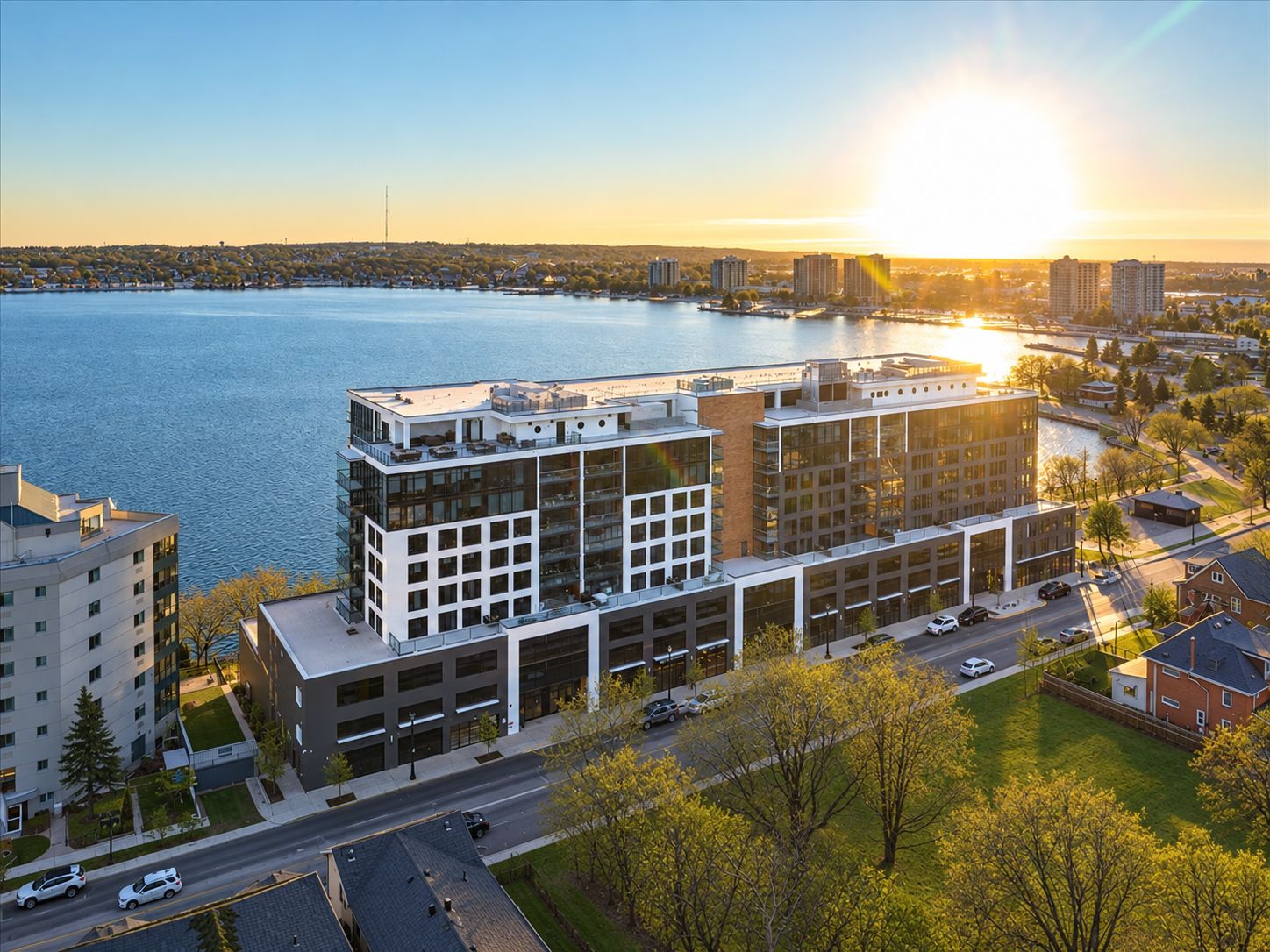
I sold my house and bought a condo myself. 185 Dunlop Street East in Barrie.
So when clients ask me what condo living is really like, I can answer from both sides of the transaction.
And the biggest thing I want buyers to understand is this:
When you buy a condo, you're not just buying the unit.
You're also buying into the condominium corporation, its finances, its rules, its reserve fund and its future expenses.
That is why what happens before you go firm can be so important.
What Should I Know Before Buying a Condo in Barrie?
A condo purchase is different from buying a typical freehold home.
When you purchase a house, much of your due diligence revolves around the physical property:
the roof, furnace, foundation, electrical system, plumbing, lot and overall condition.
With a condominium, you still care about the condition of your unit.
But now there is another layer.
You also need to understand the building or condominium community you're becoming part of.
That means asking questions such as:
- What are the condo fees?
- What exactly do they include?
- Is the corporation financially healthy?
- Is there a strong reserve fund?
- Are there upcoming major repairs?
- Are there special assessments?
- What are the condo rules?
- Is the parking owned or exclusive use?
- What insurance do I need?
- Can I use the unit the way I intend to?
CMHC recommends that condo buyers look not only at the unit, but also at whether the condominium is well managed and in good physical, financial and legal condition.
That is where a status certificate becomes extremely important.


What Is a Condo Status Certificate in Ontario?
If you're buying a resale condo in Ontario, this is one of the documents I want you to understand before you go firm.
A status certificate gives you information about the condominium corporation and the individual unit you're considering.
According to the Condominium Authority of Ontario, a status certificate can include:
- the condominium's declaration, by-laws and rules
- its current budget
- audited financial statements
- information about the reserve fund
- whether the unit is in arrears
- other important financial and legal information
Anyone can request one. A condominium corporation can currently charge up to $100, including applicable taxes, and generally has 10 days to provide it after receiving the request and payment.
A Simple Way to Think About It
A home inspection helps you investigate the physical condition of a property.
A status certificate helps your lawyer investigate the condominium corporation you're buying into.
They are not the same thing, but both can be important pieces of due diligence.
Why Does a Lawyer Review the Condo Status Certificate?
Because this is not just a stack of paperwork.
Your lawyer is reviewing documents that may affect your ownership, your monthly costs and potentially your future financial obligations.
Among other things, the review may help identify questions surrounding:
- condo fee increases
- special assessments
- the reserve fund
- lawsuits or other legal matters
- insurance
- the declaration, by-laws and rules
- financial statements
- the specific unit you're purchasing
With my current Toronto street condo buyer in Barrie, the process has been a good reminder of why I don't treat the status certificate as an afterthought.
There is a sequence. You negotiate the deal. You work through financing.
The status certificate is obtained.
The lawyer reviews it.
Questions are addressed.
And only once the appropriate conditions have been satisfied do you move toward a firm purchase.
Going firm should feel informed — not rushed.
Is Condo Financing Different From Financing a House?
YES! It can be
A mortgage pre-approval tells us a lot about what you may qualify for, but the lender may also need information about the condominium property you're purchasing.
The monthly condo fee also becomes part of your overall housing costs.
That's why I like having the mortgage professional involved early in a condo purchase instead of waiting until the last minute.
If you're comparing different Barrie condos for sale, you may find that two units with similar prices have very different monthly costs once condo fees, property taxes, utilities and other expenses are considered.
And if you're considering a more specialized property — such as a Friday Harbour condo in Innisfil — I want the mortgage professional to understand exactly what you're considering.
The objective isn't just: Can I get the mortgage? But rather:
Can I comfortably afford the entire cost of owning this condo?
What Do Condo Fees Actually Include?
This is one of my favourite condo conversations because buyers naturally focus on the number.
“Gemma, the condo fee is $900 a month!”
Okay.
But my next question is: What does the $1200 include?
Monthly condo fees can contribute toward expenses such as:
- common-area maintenance
- snow removal
- landscaping
- cleaning
- amenities
- property management
- security
- building insurance
- some utilities (the gym, sauna, pool etc...)
- contributions to the reserve fund
What is included varies by condominium.
So comparing two condos based solely on the maintenance fee can be misleading.
Example
Condo A:
$800/month
But you separately pay water, heat, parking and several other expenses.
Condo B:
$1200/month
But more of those costs are included.
Which one is more expensive?
You can't answer that from the condo fee alone.
This is why I want to know the total cost of ownership, not simply the number appearing beside “maintenance fee” on the MLS listing.
What Is a Condo Reserve Fund?
Every condo buyer should know this term.
A reserve fund is money set aside by the condominium corporation for major repairs and replacements to the common elements over time.
Think about things like:
- roofs
- elevators
- roads
- parking structures
- plumbing
- major building systems
- exterior components
CMHC explains that reserve funds are designed to help condominium corporations pay for major repairs and replacements over the life of the property.
But here's the important part:
A big reserve-fund balance does not automatically mean everything is perfect.
Different buildings have different future obligations.
A 20-storey condo with underground parking, elevators and extensive mechanical systems may need a very different reserve than a smaller condominium complex.
So the better question isn't simply:
“How much money is in the reserve fund?”
It's:
“Does the reserve fund make sense considering what this condominium will need in the future?”
That is part of what your legal review helps you understand.

What Is a Special Assessment in an Ontario Condo?
This is a phrase condo buyers definitely need to know.
A special assessment generally involves condo owners being required to contribute additional money toward condominium expenses outside their regular monthly fees.
That additional expense could be relatively small.
Or it could be significant.
Major building repairs, unexpected expenses or insufficient funding may all create additional financial pressure.
CMHC specifically warns buyers to investigate the financial condition of a condominium because an underfunded reserve combined with major repairs can potentially lead to significantly higher monthly fees or lump-sum costs.
Does the existence of a special assessment automatically mean you shouldn't buy the condo?
No.
But I want to understand:
Why was it required?
How much is it?
Has it already been paid?
Who is responsible for the remaining payments?
Is more work expected?
Those questions matter.
What Condo Rules Should Buyers Check Before Purchasing?
This part gets overlooked because it's nowhere near as exciting as seeing the kitchen.
But condo living means living within a set of declarations, by-laws and rules.
Before buying, think about what matters to you.
For example: Do you have pets? => Check the condo’s pet rules. If you require an animal for disability-related reasons, the condominium may have a duty to accommodate under Ontario human rights law, and supporting medical documentation may be requested. My client's pet was accepted to the condo she wanted to live in Vaughan, eventhough a rule was in place!
Want to barbecue on your balcony? => Check.
Planning to rent the condo? => Check the rules.
Need an EV charger? => Don't assume.
Have two cars? Parking suddenly becomes very important.
Other restrictions may involve renovations, balconies, amenities, visitors or how the unit can be used.
One of my rules with condo buying is simple:
If something matters to your lifestyle, don't assume. Verify.
What Should I Check About Parking and Lockers?
“Parking included.”
That sounds straightforward.
Sometimes it isn't.
A parking space may be:
- separately owned
- part of the unit
- an exclusive-use common element
- structured another way depending on the condominium
The same can apply to storage lockers.
CMHC notes that things like balconies, parking spaces and lockers can sometimes be common elements designated for the exclusive use of a specific owner.
So I want to know: Where exactly is the space? What number is it? How is it legally described?
Can it be rented? Can another space be purchased? Where is the locker?
Is it included in the transaction? These seem like tiny details until closing day. Then they're not tiny anymore.
Do I Need Condo Insurance If the Building Is Already Insured?
Yes.
The condominium corporation carries insurance, but that does not mean an individual owner doesn't need their own appropriate coverage.
Your personal condo policy may need to address things such as:
- personal belongings
- liability
- upgrades or improvements
- loss of use
- certain loss assessments
- deductible chargebacks
CMHC recommends buyers understand the corporation's insurance as well as the coverage required for the individual unit.
This is another reason I encourage buyers to involve an insurance professional before closing.
You want everyone doing what they do best:
Realtor. Mortgage professional. Lawyer. Insurance professional.
Buying a condo is a team effort.
Buying a Condo in Barrie vs. Buying at Friday Harbour in Innisfil
This is where local knowledge becomes really important. Because saying: “I want to buy a condo near Lake Simcoe.”
can mean completely different things.
A Barrie condo buyer may be looking for lower-maintenance living, proximity to downtown Barrie, access to the waterfront, underground parking, Highway 400 or GO Transit convenience, downsizing from a detached home, a first property, or simply a lock-and-leave lifestyle.
A Friday Harbour condo buyer, on the other hand, may be looking for something very different.
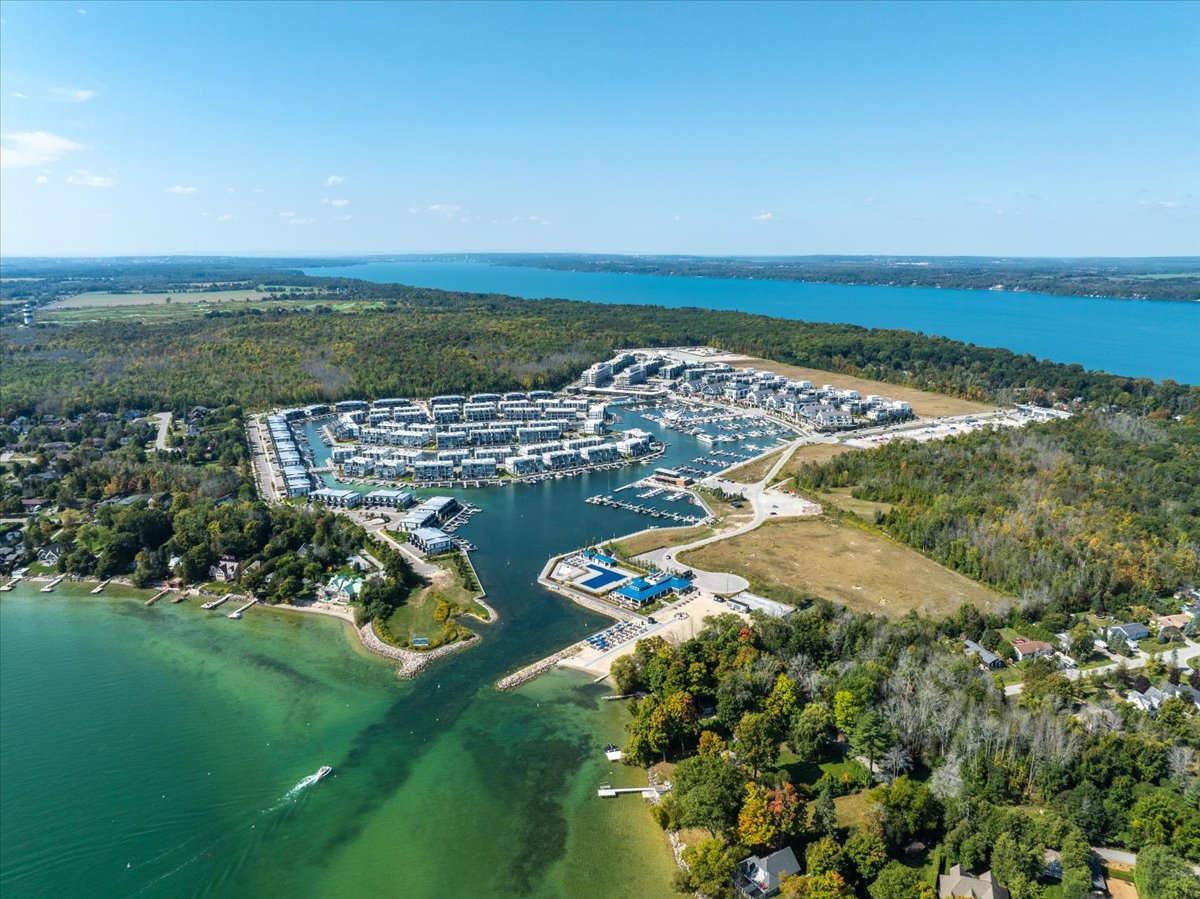
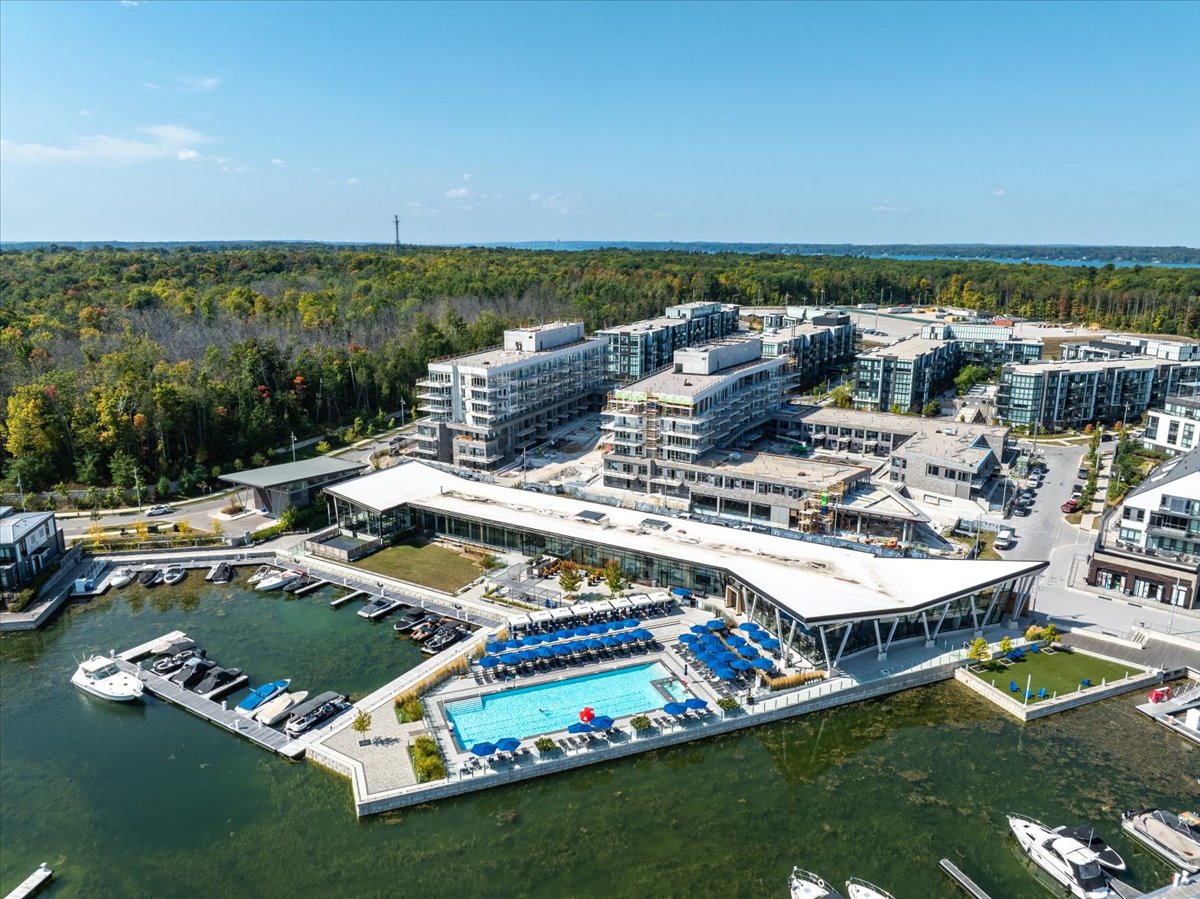
Friday Harbour is much more focused on a resort lifestyle on Lake Simcoe.
You’re considering the marina, boardwalk, restaurants, trails, beach, golf, boating and other resort amenities.
I was showing Friday Harbour condos over the Labour Day long weekend, and this is something you understand very quickly once you’re actually there with buyers.
People aren’t simply asking: “Do I like this two-bedroom condo?”
They’re imagining: Morning coffee by the marina, Dinner on the boardwalk. Going boating. Walking the trails. Spending the summer by Lake Simcoe.
And ultimately:
“Could I actually see myself living this lifestyle?”
That is a very different purchasing decision from buying a conventional residential condo in Barrie.
Neither is better. They’re simply different.
And my job is to help you figure out which one actually fits your lifestyle, budget and long-term plans.

What Extra Costs Should Friday Harbour Buyers Know About?
This is where buyers need to look beyond the monthly condo fee.
When purchasing a resale condo at Friday Harbour, there may be additional costs that need to be included in your budget from the beginning.
One important cost buyers need to understand is the 2% + HST resale fee payable to the developer on a resale transaction.
That can add up quickly.
For example, on an $800,000 Friday Harbour condo, 2% equals $16,000, before HST. That is not something I want my buyers discovering at the closing table.
It needs to be part of the affordability conversation before an offer is written.
Could HST Apply to a Resale Friday Harbour Condo?
Potentially, yes — and this is especially important when a unit has been used for Airbnb, short-term rentals or a rental pool.
Most previously occupied residential resales are normally exempt from HST. However, CRA rules contain exceptions for properties used as taxable short-term accommodation.
For example, CRA states that a previously occupied vacation property can be taxable where it was not used primarily as the seller’s residence and substantially all of its rentals were short-term, including properties operated like a hotel or placed in a rental pool. CRA also notes that the eventual sale of a residential condo used primarily for taxable short-term accommodation can be taxable.
That does not mean every Friday Harbour condo that was ever rented on Airbnb automatically has HST added to the sale price.
The answer can depend on how the seller used the condo, the extent of short-term rental activity, whether GST/HST input tax credits were claimed, and other tax circumstances.
My Friday Harbour Buyer Rule
If the condo has been used as an Airbnb, short-term rental or rental-pool property, I want the HST question addressed early:
Is HST included in the purchase price? Is HST payable in addition to the purchase price? Or is the resale exempt?
That determination should be confirmed by the buyer’s real estate lawyer and, where appropriate, accountant or tax professional before the buyer goes firm.
Are Friday Harbour Condo Fees Different?
Yes — and this is one of the biggest differences between buying a Friday Harbour condo in Innisfil and buying a more traditional condo in Barrie.
At Friday Harbour, the monthly condominium maintenance fee is only one part of the ownership cost.
In 2026, current resale listings show a separate fee structure that can include:
- Monthly condo/maintenance fee — varies by building and unit size and covers the condominium corporation’s expenses. Current 2026 listings show substantial variation from one suite to another.
- Lake Club / Club fee — current listings commonly show approximately $230.60 per month, giving homeowners access to member facilities such as the Lake Club. Friday Harbour confirms that homeowners are members and receive access to exclusive homeowner amenities.
- Annual Resort Association fee — this is separate from both the condo fee and Club fee. The amount can vary by property or membership structure. Current 2026 listings show examples ranging from roughly $1,500 to more than $3,300 per year, so buyers need to confirm the exact amount for the specific unit.
- One-time resale Entry Fee — on a resale purchase, the buyer is generally required to pay 2% of the purchase price plus HST to the Resort Association on closing. Friday Harbour's homeowner documentation confirms that resale purchases are subject to an entry fee based on a percentage of the resale price.
- Property taxes, insurance and utilities — these still need to be included in your ownership budget, depending on what the particular condo fee covers.
- Parking, marina, golf or other optional services — owning at Friday Harbour does not mean every activity is automatically included. Marina slips, golf memberships and certain other services can carry their own costs. For example, Friday Harbour publishes separate marina pricing and separate 2026 golf-membership rates.
- Possible HST on certain resale units — particularly where a property has been operated as taxable short-term accommodation, such as Airbnb or a rental-pool unit. This needs to be reviewed with the buyer's lawyer and tax professional based on the particular property's history.
And there can even be smaller resort-related charges tied to certain purchases or activities. For example, Friday Harbour documentation notes resort-related fees associated with some services and commercial or recreational transactions.
This Is Why I Never Compare Friday Harbour Condos by Maintenance Fee Alone
Two condos can have similar purchase prices and very different annual carrying costs.
When I'm helping a buyer evaluate a Friday Harbour condo for sale, I want to know:
What's the condo fee? What's the monthly Club fee? What's the annual Resort fee?
What's included — and what's extra? Is there a 2% + HST Entry Fee at closing?
Could HST apply to the resale itself? Are there additional costs for the marina, golf, parking or other amenities the buyer wants to use?
So the real question isn't:
“What's the maintenance fee?”
It's:
“What will it actually cost me to buy, own and enjoy this Friday Harbour condo every month and every year?”
That’s the number I care about.
One important thing I would keep exactly as written here: don't publish one universal annual Resort-fee dollar amount. Current 2026 listings show different figures, so the safest and most useful advice is to tell buyers to verify the fees for the specific unit and condominium corporation they are considering.


Is Condo Living Actually Easier Than Owning a House?
Now I get to answer this one personally. I sold my house and moved into a condo.
And there are things I absolutely love about it!
Less exterior maintenance. No driveway to shovel. No grass to cut. Being able to lock my door and leave.
For someone who wants to simplify life, travel more or spend less time maintaining a property, condo living can be fantastic.
But there are trade-offs too. You have neighbours closer to you. There are rules. You pay common expenses.
Some decisions about the property are made collectively rather than entirely by you.
So when somebody tells me:“Gemma, I'm thinking of selling my house and downsizing to a condo in Barrie.”
I understand that conversation on another level. I've done it.
And I think one of the biggest questions isn't: Can I afford the condo?
It's:
“Will I actually enjoy condo living?”
Because downsizing isn't just changing your square footage.
It's changing your lifestyle.
What Should You Check Before Going Firm on a Condo?
Here's my condo buyer checklist.
Before you go firm, make sure you understand: Your financing
Can your mortgage professional approve the purchase and are you comfortable with the total monthly cost?
The status certificate
Has it been obtained and appropriately reviewed?
The condominium's financial position
What do the budget, financial statements and reserve information tell us?
Special assessments
Are there any current or anticipated additional costs you need to understand?
The condo fees
What exactly do they include?
The rules
Do they work with your pets, vehicles, lifestyle and plans?
Parking and storage
What exactly are you getting?
Insurance
What coverage will you personally require?
The lifestyle
Does this condominium actually fit how you want to live?
Should I Have a Lawyer Review a Condo Before I Go Firm?
When an offer contains an appropriate status-certificate review condition, I strongly recommend having a real estate lawyer experienced with Ontario condominium transactions complete that review.
My role as your Realtor is to help you identify issues, ask good questions, understand the transaction and coordinate the process.
Your lawyer provides the legal advice.
Your mortgage professional handles financing.
Your insurance professional handles coverage.
Good condo buying isn't about one person trying to know everything.
It's about having the right professionals involved at the right time.
Frequently Asked Questions About Buying a Condo in Barrie or Innisfil
Is buying a condo in Barrie a good idea?
It can be an excellent option for buyers who want lower-maintenance living, access to Barrie's amenities and waterfront, or an alternative to owning a traditional detached home. Whether it makes sense depends on the specific condominium, its finances, your budget and your lifestyle.
What should I look for when buying a condo in Barrie?
Look beyond the individual unit. Review the condo fees, status certificate, financial statements, reserve-fund information, rules, insurance, parking, storage and any special assessments.
What is a status certificate when buying a condo in Ontario?
A status certificate provides important information about the individual condo unit and condominium corporation, including governing documents, financial information and reserve-fund information. It is especially important when purchasing a resale condo.
How much does a condo status certificate cost in Ontario?
The Condominium Authority of Ontario says corporations can currently charge up to $100 including applicable taxes for a status certificate.
Are condo fees always bad?
No. Condo fees pay for expenses associated with operating and maintaining the condominium's common elements and may also include various services and utilities. Part of the fees typically contributes to the reserve fund.
The important question is what you're receiving for those fees and whether the condominium is being responsibly managed.
What is a special assessment?
A special assessment is an additional financial obligation that can be charged to owners beyond their regular condo fees to address condominium expenses. Buyers should investigate any current assessment and the overall financial health of the corporation.
Are Friday Harbour condos different from regular condos?
They can be. Friday Harbour is a resort-style community in Innisfil on Lake Simcoe, so buyers should evaluate not only the condominium unit but also the lifestyle, amenities and total ownership costs associated with the specific property.
Should I buy a condo before selling my house?
That depends on your finances, market conditions, timing and tolerance for carrying two properties. If you're downsizing, we can build a strategy around selling and buying that reduces unnecessary pressure.
Do I need a Realtor when buying a condo?
You aren't simply evaluating four walls. A Realtor experienced with local condominium transactions can help you assess comparable sales, negotiate your offer, coordinate conditions, identify questions to investigate and work with your lawyer and mortgage professional throughout the purchase.
Prefer to Watch? My Condo Buying Video
I also created a video about condo buying and condo living.
If you're considering buying a condo in Barrie, Innisfil or elsewhere around Lake Simcoe, watch it here and then use this guide as your checklist before making an offer.
Video:
Thinking About Buying a Condo in Barrie, Innisfil or Friday Harbour?
Whether you're a first-time condo buyer in Barrie, selling a house and downsizing, searching for an Innisfil condo, considering Friday Harbour real estate, or looking for a condo near Lake Simcoe, I can help you look beyond the pretty listing photos.
I'm currently helping buyers navigate Barrie condo purchases, including financing, conditions and status-certificate review.
I actively show and market Friday Harbour condos in Innisfil.
And I've personally made the move from a house into condo living.
That gives me a perspective I think matters.
Because we're not just deciding whether you like a condo.
We're deciding:
Is this a good property?
Is this a healthy condominium?
Does the financial picture make sense?
And does this lifestyle make sense for you?
If you're considering buying or selling a condo in Barrie, Innisfil, Friday Harbour or around Lake Simcoe, reach out and let's start with a conversation.
Gemma Leggett | Barrie & Lake Simcoe Waterfront Real Estate Broker
Remax Hallmark York Group.

Helping buyers and sellers throughout Barrie, Innisfil, Friday Harbour, Lake Simcoe and Simcoe County.
This article is provided for general real estate information and does not constitute legal, mortgage, financial or insurance advice. Buyers should obtain independent advice from the appropriate qualified professionals for their individual situation.