

Imagine this. Your children are standing in the driveway of the family home after you've passed away.
One wants to keep it because it's filled with memories.
Another wants to sell it immediately. Someone asks,
"Who owns the house now?" Then another question comes up. "What happens to the mortgage?"
Suddenly, everyone realizes no one actually knows.
As uncomfortable as it may be to think about, this situation happens every day across Ontario.
The good news?
With a little planning, many of these headaches can be avoided.
Estate planning isn't really about death.
It's about protecting the people you love from confusion, unnecessary legal costs, delays, and family conflict.
Let's walk through what really happens.
First... What Happens When Someone Dies?
If you own a home in Ontario, your property usually becomes part of your estate.
From there, several things happen before anyone inherits the home.
Your executor is responsible for managing your estate.
Outstanding debts must be dealt with.
Taxes must be addressed.
In most cases, probate is required before ownership can be transferred or the property can be sold.
Whether this process is simple or stressful often comes down to one question:
Did you leave a valid will?
Did You Know? A Will Changes Almost Everything
If you've prepared a valid will, you've already made life much easier for your loved ones.
Your executor applies for what's known as a Certificate of Appointment of Estate Trustee (commonly called probate).
Once approved, your executor follows the instructions you've left behind.
Your home may be:
• transferred to the beneficiary you've named
or
• sold, with the proceeds divided according to your wishes.
A simple example
Let's imagine Linda owns a home worth $900,000. Her will leaves the property equally to her three children.
One wants to live there. One wants to sell immediately.
The third wants to rent it.
Without clear instructions, disagreements can delay everything for months.
Sometimes those disagreements end up costing thousands of dollars in legal fees that could have stayed within the family.
A clear will often prevents those situations.
What If There Is No Will?
This is called dying intestate. Instead of following your wishes...
Ontario law decides.
Under Ontario's Succession Law Reform Act, assets are distributed according to provincial rules.
Generally speaking:
• A married spouse receives the first $350,000 of the estate.
• The remaining estate is divided between the spouse and children.
• If there is no spouse or children, the estate moves to parents, siblings, and eventually more distant relatives.
Here's something many people don't realize...
Common-law spouses do not automatically inherit under Ontario's intestacy rules.
Without a will, the court appoints an estate trustee, decisions often take longer, and family disagreements become much more common.
Did You Know? Your Home Doesn't Always Need Probate
This surprises many homeowners.
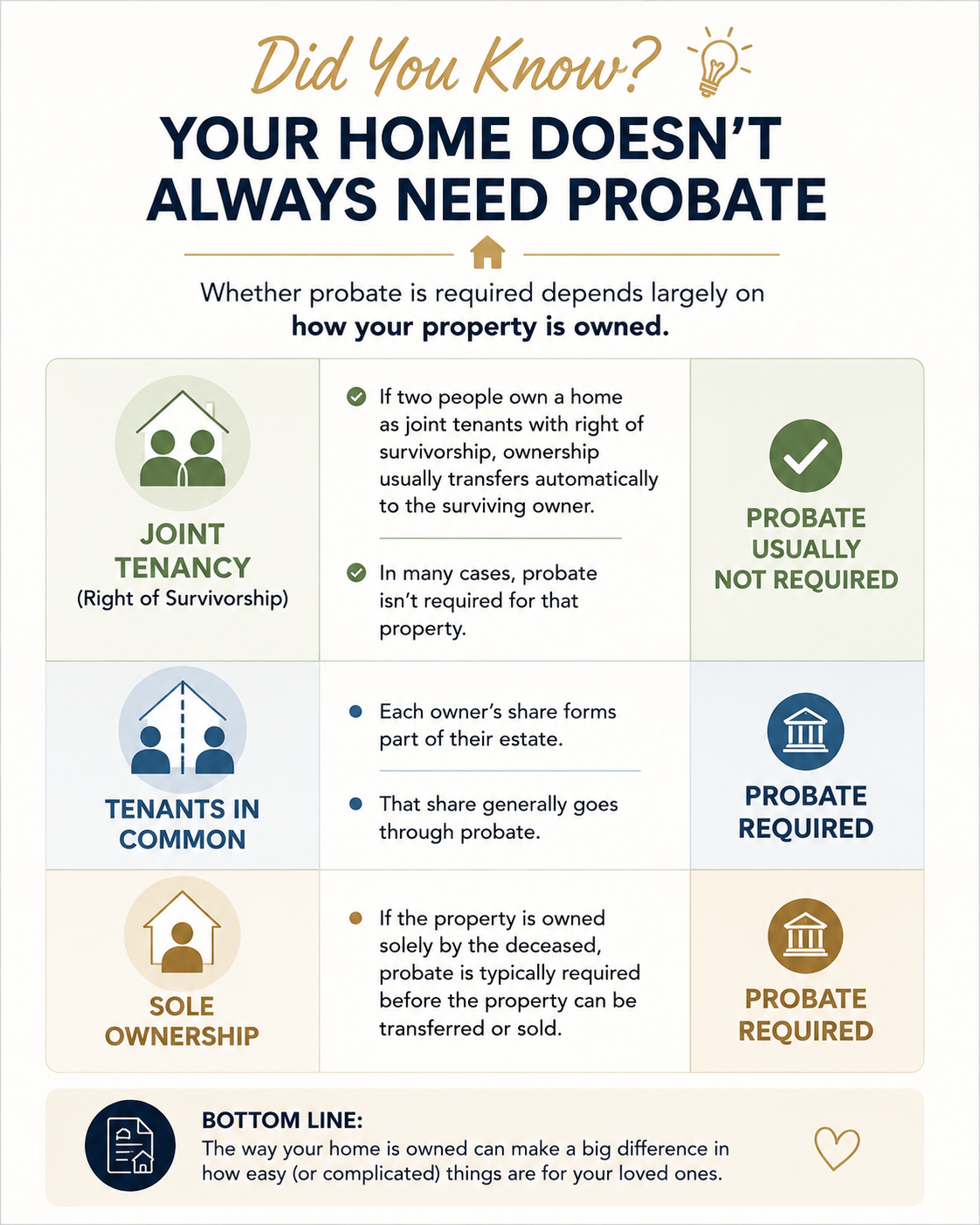
Whether probate is required depends largely on how your property is owned.
Joint Tenancy
If two people own a home as joint tenants with right of survivorship, ownership usually transfers automatically to the surviving owner.
In many cases, probate isn't required for that property.
Tenants in Common
Each owner's share forms part of their estate.
That share generally goes through probate.
Sole Ownership
If the property is owned solely by the deceased, probate is typically required before the property can be transferred or sold.
Did You Know? Adding Your Child to Title Isn't Always the Easy Solution
Many parents believe adding an adult child to the title of their home automatically avoids probate.
Sometimes it does. Sometimes it creates completely different problems.
Depending on the circumstances, it could create tax consequences, ownership disputes, exposure to creditors, or complications if that child separates or divorces.
It's one of the most misunderstood estate planning strategies.
Always speak with an estate lawyer before making this decision.
What Happens to the Mortgage?
One of the biggest myths I hear is:
"The mortgage gets paid off when someone dies."
Not necessarily.
The mortgage doesn't disappear.
Someone still has to make the payments.
Before beneficiaries receive the home or any sale proceeds, the estate is responsible for paying:
• the mortgage
• property taxes
• outstanding debts
If the estate doesn't have enough money, the home may need to be sold.
Did You Know? Mortgage Insurance and Life Insurance Are Not the Same Thing
Many homeowners assume their mortgage is automatically paid off because they "have insurance."
That depends on what type of insurance they actually purchased.
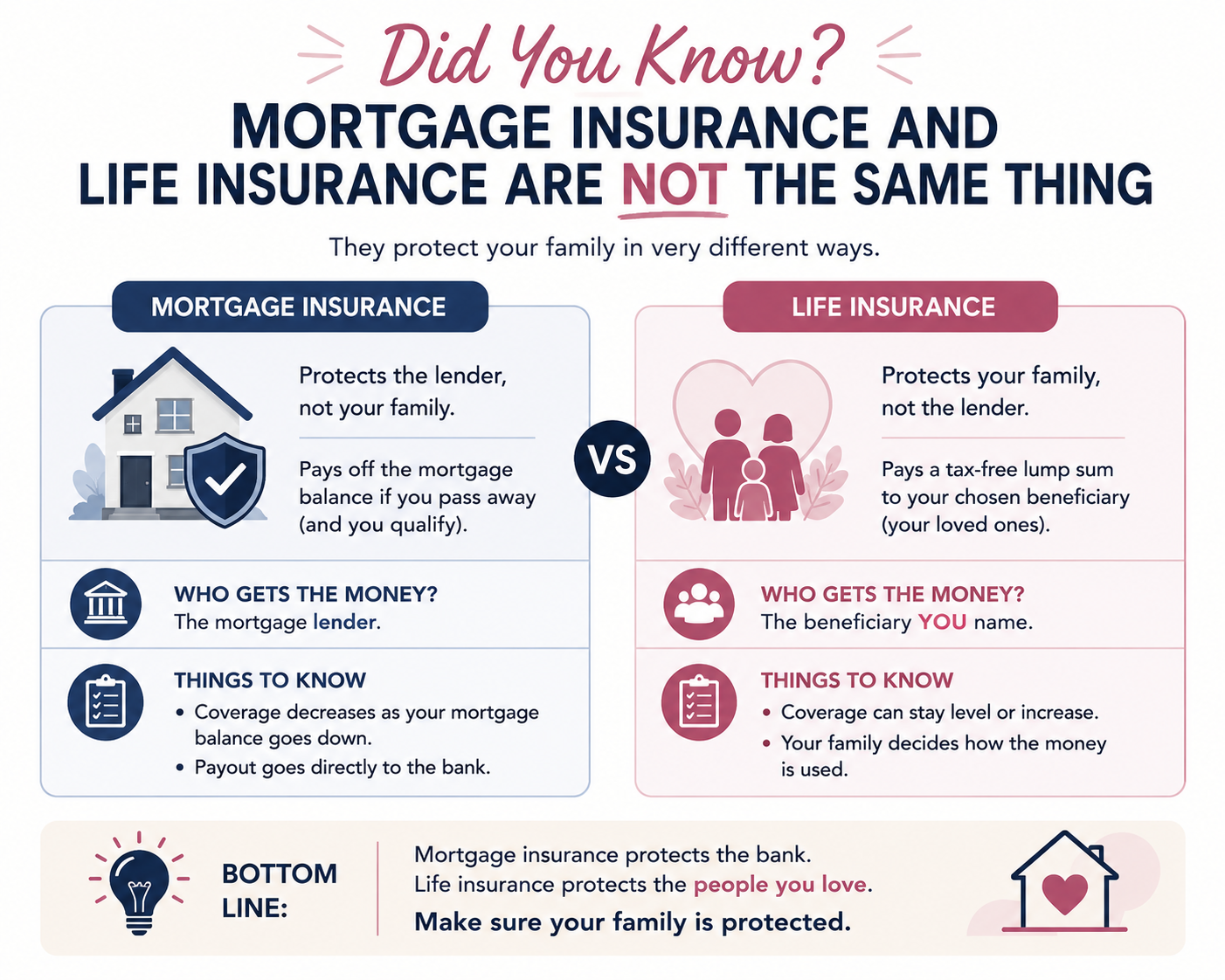
Mortgage insurance generally pays the lender if you qualify under the policy.
Life insurance pays the beneficiary you've named, who can then choose how to use those funds, whether that's paying off the mortgage, covering living expenses, or meeting other financial needs.
They're very different products, and understanding the difference can make a significant impact on your family's financial future.
What About Capital Gains Tax?
Another common misconception is that there are never taxes when someone dies.
That's not always true.
If the home was your principal residence, there is generally no capital gains tax.
However, taxes may apply if the property was:
• a cottage
• a rental property
• an investment property
• one of several properties you owned
Proper estate planning can significantly reduce unnecessary taxes.
How Much Does Probate Cost?
Many families don't think about probate until they're already dealing with a loved one's estate.
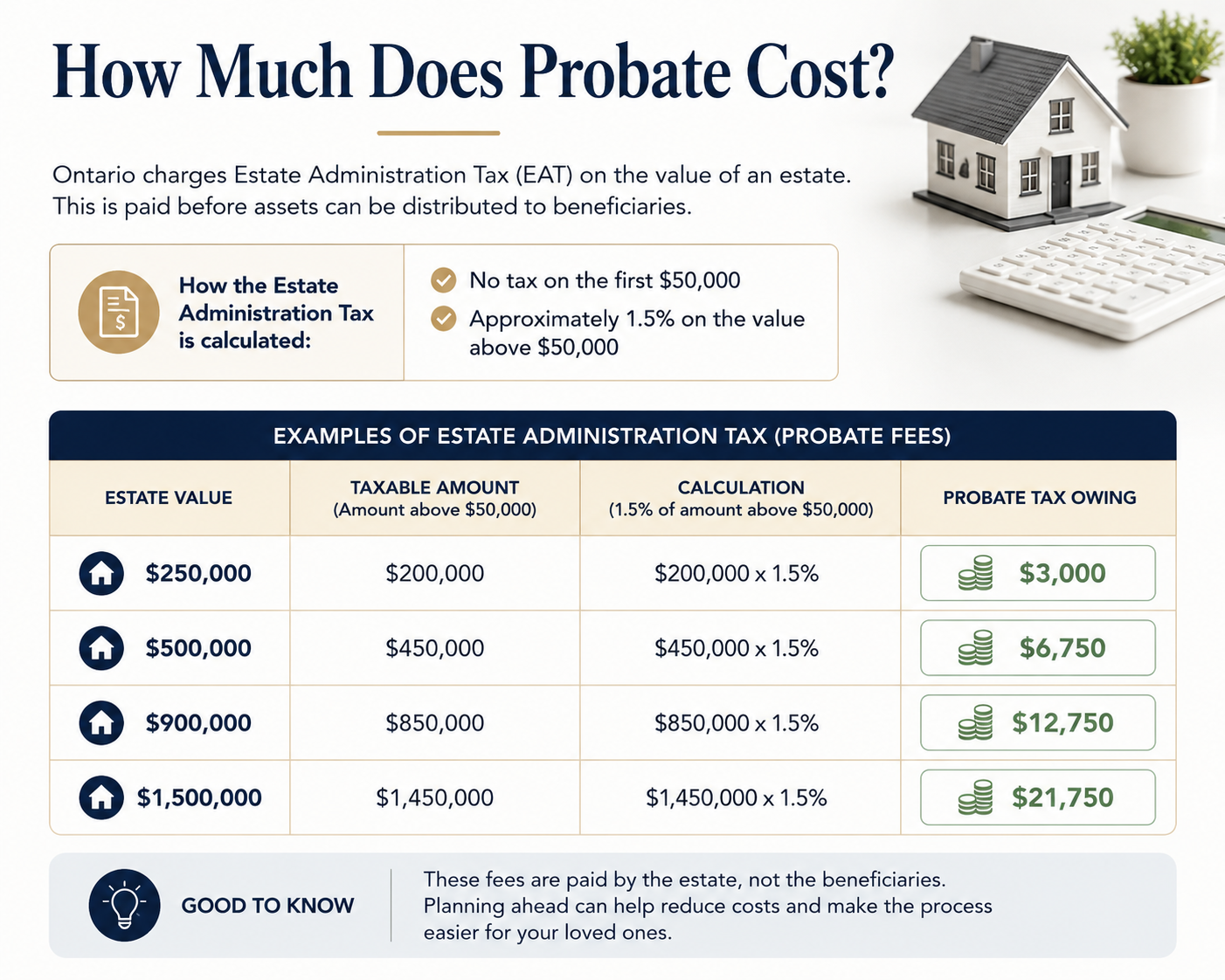
Ontario charges Estate Administration Tax, commonly called probate fees.
Currently:
• there is no probate tax on the first $50,000 of an estate
• above that, the tax is approximately 1.5% of the remaining value
For larger estates, that can amount to several thousand dollars.
Understanding this ahead of time allows families to plan appropriately.
Does the Government Take Your House?
This is probably the biggest myth of all.
No.
Not if you have legal heirs.
Only in the very rare situation where someone dies without a will and without any legal beneficiaries can an estate eventually pass to the Crown.
For the vast majority of Ontario families, your home stays within your family, provided you've planned properly.
Why This Matters?
As a Realtor, I've seen families trying to navigate one of the hardest moments of their lives while also dealing with lawyers, paperwork, probate, mortgages, and difficult decisions about a home filled with memories.
I've seen sales delayed because of outdated wills.
I've seen disagreements prevent listings from moving forward.
I've seen families lose valuable time and money simply because no one knew what the deceased wanted.
Most of these situations could have been made much easier with proper planning.
Final Thoughts
None of us likes thinking about what happens after we're gone.
But every one of us cares about the people we leave behind.
Your home is likely your largest financial asset.
The greatest gift you can leave isn't just the house itself.
It's leaving clear instructions, minimizing legal complications, and making an already difficult time just a little easier for the people you love.
A few hours spent reviewing your will, your ownership structure, your insurance, and your estate plan today could save your family months of stress tomorrow.
❓ Frequently Asked Questions: What Happens to Your House When You Die in Ontario?
1. Does a house automatically go to your spouse when you die in Ontario?
It depends on ownership structure.
If you own the home as joint tenants, it automatically transfers to the surviving spouse.
If you own it solely in your name, it becomes part of your estate and typically goes through probate.
If you die without a will, Ontario’s Succession Law Reform Act determines how it is divided.
2. Does a house always go through probate in Ontario?
Most of the time, yes.
Probate is generally required when:
The property was solely owned
The deceased owned a share as tenants in common
Probate is usually not required when the home is owned jointly with right of survivorship.
3. How long does probate take in Ontario for real estate?
Typically 3–6 months, but it can take longer depending on:
Court processing times
Completeness of documentation
Disputes among beneficiaries
During this time, the property usually cannot be sold unless special permission is granted.
4. What happens to the mortgage when someone dies?
The mortgage does not disappear.
The estate must continue payments or pay it off before distributing assets. If funds are insufficient, the property may need to be sold.
5. Can siblings force the sale of an inherited house?
Potentially, yes.
If multiple beneficiaries inherit the property and disagree on what to do with it, one party may apply to the court to force a sale under Ontario property law.
Clear instructions in a will reduce this risk.
6. Does capital gains tax apply when inheriting property in Canada?
If the home was the principal residence, typically no capital gains tax applies.
However, tax may apply if:
It was a rental property
It was a secondary property (cottage, investment)
It was not designated as a principal residence
Always consult a tax professional.
7. What happens if there is no will and no family?
In rare cases where no legal heirs exist, the estate may pass to the Crown. This is uncommon.
Realtor Disclaimer
I am a licensed Realtor® in Ontario. This article is for general educational purposes only and does not constitute legal or tax advice. Always consult an estate lawyer or financial advisor for advice specific to your situation.